Why the 9mm Luger Dominates as the Go-To Defensive Round
The Best 9mm Ammo for Every Shooters Needs and Budget
A shooter loads a magazine with 9mm rounds, feeling the snug fit of the rimless brass case against the follower. Each cartridge contains a primer, propellant powder, and a jacketed bullet .32 Win Special Ammo for Sale that ignites upon firing, driving the projectile through the barrel at high velocity. This caliber offers a balanced blend of manageable recoil, reliable feeding, and effective terminal performance, making it suitable for target practice, competition, and personal defense. Proper storage in a cool, dry place ensures consistent ignition and accuracy for every round fired.
Why the 9mm Luger Dominates as the Go-To Defensive Round
The 9mm Luger’s reign as the go-to defensive round boils down to a perfect balance of **controllable power** and magazine capacity. Modern 9mm ammo, loaded with high-performance hollow points, penetrates deeply enough to reach vital organs while minimizing over-penetration risk in a home. Its mild recoil allows .35 Remington Ammo for Sale faster, more accurate follow-up shots under stress, since a hit with a 9mm beats a miss with a bigger caliber. You also get 15–18 rounds in a standard pistol grip, versus fewer heavier rounds. Q: Why does 9mm Luger edge out .45 ACP for defense? A: Because you can shoot it faster and carry more of it, with modern bullet tech delivering near-identical wound potential. That practical synergy of speed, capacity, and proven terminal performance makes 9mm ammo the pragmatic choice for everyday carry.
What Makes the 9mm Cartridge a Balanced Mix of Stopping Power and Control
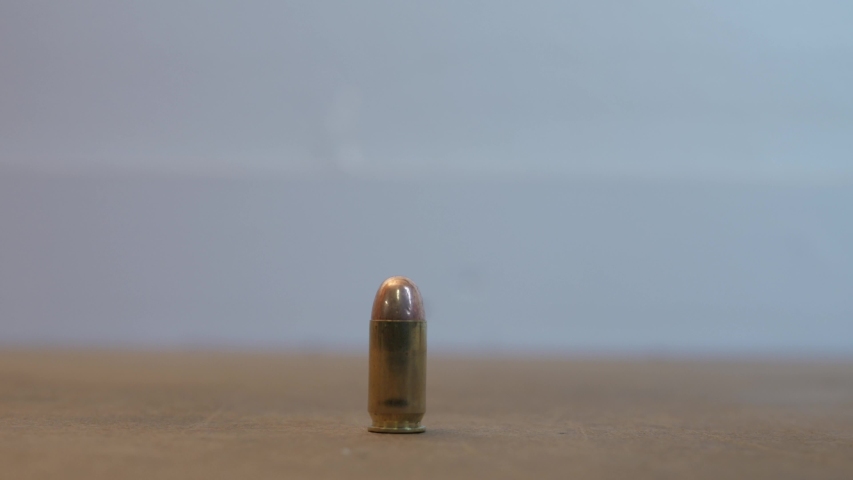
The 9mm cartridge achieves its balance through a specific pressure-to-projectile weight ratio. A 115–147 grain bullet moving between 1,000–1,200 fps generates enough kinetic energy to penetrate to FBI-standard depths, yet the recoil impulse stays manageable due to its moderate case capacity. This allows shooters to maintain sight alignment during rapid follow-up shots, a crucial factor for defensive accuracy. The cartridge’s bore diameter and case taper also contribute to reliable feeding and extraction, reducing malfunctions under stress. Crucially, modern hollow-point designs expand predictably at these velocities, maximizing wound cavitation without over-penetration. This equilibrium between terminal effect and shooter control is why 9mm’s recoil-to-damage ratio remains the practical benchmark for defensive 6.5x57mm Mauser Ammo for Sale handguns.
9mm’s edge lies in its ability to deliver adequate penetration and expansion while keeping muzzle rise low enough for fast, accurate follow-up shots—true https://specialtysportsandsupplyltd.com/ stopping power without losing control.
Comparing Recoil Energy and Muzzle Velocity Against Other Common Calibers
Against .40 S&W, the 9mm Luger delivers roughly 30% less recoil energy while retaining comparable muzzle velocity with modern loads, often pushing 115-grain bullets past 1,200 fps. This lower impulse enables faster follow-up shots without sacrificing the flat trajectory needed for defensive engagements. Compared to .45 ACP, 9mm’s higher velocity—typically 950–1,350 fps versus 830–950 fps—produces a flatter arc at typical handgun distances, .32 ACP Ammo for Sale while recoil energy sits around 3–5 ft-lbs lower, mitigating muzzle rise. Against .380 ACP, 9mm’s velocity advantage exceeds 300 fps, yet recoil remains manageable, making it the practical midpoint between controllability and terminal performance in recoil-to-velocity efficiency.
Full Metal Jacket vs. Hollow Point: Choosing the Right Bullet for Your Purpose
For 9mm ammo, the choice between Full Metal Jacket (FMJ) and Hollow Point (HP) boils down to your goal. FMJ’s solid construction feeds flawlessly and punches cheap holes in paper, making it the obvious pick for range practice and training. Hollow Points, however, expand on impact, dumping energy into soft tissue while drastically reducing over-penetration—critical for defensive carry. Never trust FMJ for self-defense, as it can pass through a threat and hit bystanders. Quick Q&A: «Can I use FMJ for home defense?»—Only if you want drywall damage and a lawsuit, since HPs stop inside the target. For 9mm, match the bullet to the task: FMJ for drills, HP for protecting your life.
When to Rely on FMJ for Range Practice and Target Drills
For routine range practice and target drills, FMJ is the undisputed workhorse of 9mm ammunition. Its gilding-metal jacket prevents lead fouling in your barrel, ensuring consistent chamber pressures and reliable feeding during high-volume sessions. Because FMJ lacks expansion, you can focus purely on sight alignment, trigger control, and recoil management without worrying about over-penetration barriers or terminal ballistics—concerns irrelevant to paper. The lower cost per round versus hollow points lets you fire hundreds of repetitions to build muscle memory. For drills emphasizing speed, transitions, or malfunction clearance, the uniform profile of FMJ guarantees the same slide timing as defensive loads, so your practice mechanics transfer cleanly. Keep hollow points for carry; reserve FMJ for every repetition that hones your fundamental shooting.
Q: When should I rely on FMJ instead of hollow points for target drills?
A: Rely on FMJ whenever your goal is raw repetition, accuracy fundamentals, or practicing manipulation on a flat range—especially if you’re shooting over 200 rounds per session and want to preserve your barrel from excessive copper fouling or save budget for more trigger time.
How Jacketed Hollow Points Expand to Maximize Self-Defense Impact
Jacketed hollow-point expansion in 9mm loads begins the instant the bullet’s cavity impacts fluid-rich tissue, forcing hydraulic pressure to peel the jacket’s nose petals outward. This controlled radial widening increases the wound profile by roughly 60–70% compared to a full metal jacket, transferring energy rapidly and creating a permanent cavity that disrupts vital structures. The expansion sequence follows a predictable path: the hollow nose plugs with tissue, internal pressure flares the copper jacket, and the lead core mushrooms into a flat disc. Because 9mm rounds Ammunition for Sale rely on velocity rather than mass, this nearly instantaneous expansion ensures reliable stopping power without over-penetrating walls or bystanders, making it the preferred defensive choice for civilian carry and law enforcement alike.
Understanding Bullet Grain Weight and How It Affects Trajectory
In 9mm ammo, grain weight directly dictates bullet velocity and, consequently, trajectory curvature. Lighter projectiles, like 115-grain, leave the muzzle faster but shed speed quickly, producing a more pronounced drop at extended ranges. Heavier 147-grain loads fly slower initially but retain momentum better, often resulting in a flatter, more predictable arc past 25 yards. The 124-grain offering balances these extremes, generally yielding a trajectory that lets you hold on target from zero to 50 yards with minimal holdover. For practical shooting, zeroing a 115-grain load at 15 yards then firing 147-grain ammo will show a noticeable point-of-impact shift at 25 yards. **Always test your specific load at the distances you intend to shoot.** Q: What is the practical takeaway for trajectory? A: Heavier grains in 9mm tend to shoot higher at longer ranges due to less velocity bleed-off, not because they defy physics—they just arc less steeply.
What 115, 124, and 147 Grain Loads Do Differently in Your Barrel
In your barrel, 115, 124, and 147 grain loads diverge primarily in pressure timing and recoil impulse. A **115-grain load** produces a sharper, snappier recoil due to faster powder burn and higher peak pressure, which can cause more muzzle flip but also faster slide cycling. A 124-grain round offers a balanced dwell time, often yielding the most consistent accuracy as the projectile’s inertia aligns with the barrel’s rifling twist rate. A 147-grain subsonic load generates lower peak pressure, creating a softer, push-like recoil and longer barrel dwell, which can reduce perceived noise but may cause unreliable cycling in lighter recoil springs. These differences affect your point of aim, as heavier bullets typically impact higher due to longer bore time before exit.
Q: What 115, 124, and 147 grain loads do differently in your barrel regarding accuracy?
A: 124-grain loads frequently group tighter because their velocity and pressure curve match standard barrel timing, whereas 115-grain rounds may shoot lower and 147-grain rounds shoot higher at typical self-defense distances.
Selecting the Ideal Grain for Shorter Barrels vs. Full-Size Handguns
For shorter 9mm barrels (under 4 inches), heavier grains like 147gr are the ideal choice because they generate lower peak pressure and more complete powder burn, maximizing velocity despite limited dwell time. Lighter 115gr loads often produce excessive flash and unburned powder in compact slides. Full-size handguns (4.5 inches or longer) handle 124gr or 115gr more efficiently, as the extended barrel allows faster-burning powders to reach full pressure, yielding flatter trajectories and sharper recoil impulse. In subcompacts, 147gr also reduces muzzle flip due to slower recoil velocity, while in duty 6.5×55 Swedish Ammo for Sale pistols, 124gr balances speed and energy for consistent sight recovery. Always verify your firearm’s twist rate—most stabilize 147gr adequately, but some older barrels prefer 124gr for accuracy.
Evaluating the Role of Brass, Aluminum, and Steel Casings
When evaluating 9mm casings, brass is the baseline—it’s malleable, resizes cleanly, and seals chambers reliably, making it ideal for reloading. Aluminum is lighter and cheaper, but it’s single-use and can stick in tight chambers if pressures spike, so it’s best for range plinking where you don’t care about collecting brass. Steel, often polymer-coated, is toughest on extractors and tends to leave carbon rings that are harder to scrub, but it’s the most budget-friendly for high-volume training. For most shooters, brass wins for consistency, while steel or aluminum only make sense if you’re okay with tossing the case after firing. Q: Can you reload aluminum 9mm cases? A: Technically yes, but they often crack after one or two resizes, so it’s rarely worth the effort—stick to brass for that.
Why Brass Cases Offer Reliable Extraction and Easy Reloading
When you’re shooting 9mm, brass cases are the gold standard because they combine springy toughness with a slick surface. That natural elasticity lets the case grip the chamber wall under pressure, then snap back to size for smooth, reliable extraction every time—no stuck cases or painful mortar clears. For reloading, brass is forgiving: it stretches and compresses without cracking, so you can resize, re-prime, and re-powder it dozens of times. The simple routine is:
- Deprime and clean off residue.
- Lube and resize to spec.
- Trim if needed, then load fresh primers and powder.
This cycle stays consistent because brass doesn’t corrode quickly or gall like softer metals, giving you trustworthy feeding and easy case prep for your next range day.

When Budget-Friendly Steel Casing Is a Smart Purchase for High-Volume Shooting

For shooters burning through hundreds of rounds per session, budget-friendly steel casing is a smart purchase when your priority is trigger time, not component longevity. Steel’s lower cost per round lets you double your practice volume for the same dollar outlay, which directly accelerates muscle memory and recoil management. It performs best in Glock-style pistols with fully supported chambers and in AR-9 platforms designed for extractor tension. However, avoid it in tight-match 1911s or guns with aftermarket barrels, as the harder case material accelerates extractor wear and can stick after rapid fire. For pure, high-round-count drills where accuracy beyond 15 yards is secondary, steel is your value workhorse.
How to Read 9mm Box Labels for Pressure, Velocity, and Primer Type

The box of 9mm ammo in your range bag tells a story before you even load a magazine. On the side, you’ll spot **pressure** markings—look for “+P” or “+P+” stamped near the caliber, signaling higher pressure than standard 9mm Luger, which affects recoil and firearm compatibility. Next, scan for **velocity** data, often listed in feet per second (fps) from a specific barrel length, like “1,150 fps,” giving you a sense of flat trajectory and energy downrange. Finally, check the **primer type**—usually printed as “boxer” or “berdan.” For reloaders, boxer primers are the norm because they’re easily punched out and reused, while berdan requires special tools. Understanding these three numbers and stamps means you’re not just grabbing ammo—you’re choosing the right story for your pistol’s action and your shooting goals.
Decoding Standard Pressure vs. +P Loads and When to Use Them
Decoding standard pressure vs. +P loads hinges on the SAAMI maximums printed on the box: standard 9mm runs at 35,000 psi, while +P is limited to 38,500 psi. That 10% bump increases velocity but also raises chamber pressure, recoil, and slide speed. Use +P only in firearms explicitly stamped or manual-rated for it; older pistols, especially pre-1980s designs, risk accelerated wear or failure. Standard pressure is always safe in any 9mm in good condition. For self-defense against barriers or longer barrels, +P offers marginal expansion gains; for target practice or lightweight alloy frames, stick to standard. Velocity gains from +P often shrink dramatically in short-barrel carry guns, making recoil cost unjustified.
- Check the box for “+P” or “Standard” pressure markings, not just the caliber name.
- Inspect your pistol’s slide for a “+P” proof stamp or consult the manual to confirm compatibility.
- Match .338 Lapua Ammo for Sale +P to defensive loads; reserve standard pressure for high-volume range sessions.
Understanding Box Primers for Cleaner Burning and Snappier Ignition
When you’re reading a 9mm box, the primer type tells you a lot about how the round will behave. **Cleaner-burning boxer primers** usually mean less carbon fouling in your action and barrel, which keeps your gun running smoother during long range sessions. A snappier ignition, often from a sensitive primer compound, gives you more consistent powder burn and faster lock time, which can tighten up your shot-to-shot velocity. Check for markings like “clean-burning” 6.8 SPC Ammo for Sale or “match” on the label. If you reload, stick to boxer-primed brass for easy decapping—it’s the standard for 9mm target and defense loads.
- Look for “low-fouling” or “clean” on the box to reduce cleaning time.
- Match primer sensitivity to your gun’s striker spring for reliable ignition.
- Boxer primers are reload-friendly; avoid berdan if you save brass.
Practical Storage and Handling Tips to Keep Your 9mm Rounds Reliable
To keep your 9mm ammo reliable, start by storing boxes in a cool, dry place—ideally below 75°F with low humidity. Avoid basements or garages where moisture cycles can corrode brass and dull primers. Use airtight ammo cans with silica gel packs, and always wipe down rounds with a dry cloth before loading if they feel damp. Rotate your stock, shooting older boxes first, to prevent seal degradation over time. When handling, never drop loose rounds into a pocket or range bag where they can pick up grit; debris on the case can cause feed issues. Finger oils are fine in small amounts, but avoid touching primers. Finally, keep loaded magazines at half capacity if stored long-term—this preserves spring tension and prevents bullet setback, which is a key part of practical storage and handling for consistent ignition.
Storing Loose Rounds and Factory Boxes to Prevent Corrosion and Dented Casings
Keep 9mm rounds in their original factory boxes to prevent corrosion and dented casings, as the fitted trays lock each cartridge in place, stopping brass-on-brass contact that causes dings. For loose rounds you’ve dumped into a range bag or bulk container, separate 6.5x57R Ammo for Sale them by caliber into compartmentalized ammo cans lined with a silicone-treated cloth—never let them rattle freely. Add a desiccant pack per layer to wick humidity, and rotate stored loose rounds every few months so no single casing bears constant pressure from the stack above. Inspect for green spots on brass or shallow dents near the case mouth before reloading loose batches into magazines.
- Use Styrofoam or foam inserts in cans to cradle loose rounds individually.
- Seal factory boxes in zip-top bags with the original cardboard intact for moisture barriers.
- Never mix loose rounds from different lots in one container to avoid galvanic corrosion between case finishes.
- Place loose rounds primer-down in trays to reduce pressure dents on case shoulders.
Rotating Your Carry Ammo and Checking for Setback After Repeated Chambering
Repeatedly chambering the same 9mm round can drive the bullet deeper into the case, a condition known as setback, which spikes chamber pressure dangerously. To mitigate this, rotate your carry ammo by cycling the top round to the bottom of your magazine after each unloading session, ensuring no single cartridge bears the brunt of repeated feeding. Measure the overall length of suspect rounds with calipers against a factory reference; any reduction beyond 0.01 inch means immediate disposal. Even visually perfect brass can hide internal pressure risks, so rely on measurement, not appearance alone. Follow this sequence:
- Unload your magazine and rotate the chambered round to the magazine’s base.
- Inspect the remaining rounds for visible bullet creep or a rolled case mouth.
- Use calipers to compare each cartridge’s length to a fresh control round.
- Retire any round showing setback to your practice stash, never to defensive use.
Track how many times each round has been chambered; two to three cycles is the safe maximum for most 9mm loads.